
Hybrid Cars in Nigeria 2026: Are They Worth It With Today’s Fuel Prices? | Mywheels9ja

Car Buying Guide · May 2026
Hybrid Cars in Nigeria 2026:
Are They Finally Worth Your Money?
● Mywheels9ja Editorial● May 3, 2026● 9 min read
Fuel is no longer a minor line item on your monthly budget — it has become one of the biggest household expenses in Nigeria. With petrol now selling at between ₦1,325 and ₦1,400 per litre at filling stations across Lagos, Abuja, and Port Harcourt, the average Nigerian driver is spending more to fill a tank than at any point in history. In that context, the conversation around hybrid vehicles has shifted from “interesting idea” to urgent financial decision. This is everything you need to know.
₦1,350 Max petrol price per litre (May 2026)
5L Hybrid fuel use vs 13L for petrol — same distance
60% Potential monthly fuel saving with a hybrid
300% Rise in pump prices since 2023 subsidy removal
Nigeria’s Fuel Crisis, Explained in Plain Numbers
Before President Tinubu’s inaugural declaration in May 2023 – “Subsidy is gone” – Nigerians were paying around ₦198 per litre at the pump. By that same evening, the price had surged past ₦500. It kept climbing. By early 2026, NNPC’s revised pricing had pushed pump prices to between ₦867 and ₦1,175 per litre, with the black market trading considerably higher in states with distribution challenges.
The knock-on effect has been severe. Transportation costs shot up nearly 300% across major cities. Food prices followed. For the average office worker commuting daily in Lagos – say, from Ikorodu to the Island, the monthly petrol spend in a conventional V6 SUV now exceeds what many households allocated to feeding a year ago. This isn’t hyperbole; it’s arithmetic.
Long queues at filling stations have become a recurring reality for Nigerian drivers since the 2023 subsidy removal.
It is against this backdrop that hybrid vehicles — long dismissed as a luxury toy for tech enthusiasts have become one of the most practical car-buying decisions you can make in Nigeria today.
What Exactly Is a Hybrid Car?
A hybrid vehicle combines a conventional internal combustion engine (ICE) with one or more electric motors and a battery pack. The two power sources work in tandem — and the system is intelligent enough to decide, in real time, which source is most efficient for any given driving scenario.
There are three broad types you’ll encounter on the Nigerian market:
1. Full Hybrid (HEV)
The most common type in Nigeria. The car can run on the electric motor alone at low speeds, on the petrol engine alone on highways, or on both simultaneously when maximum power is needed. Crucially, the battery charges itself through a process called regenerative braking — energy that would normally be wasted as heat when you brake is captured and stored. You never plug this car in. The Toyota Corolla Hybrid, Toyota Venza, and Lexus RX 450h all fall into this category.
2. Plug-in Hybrid (PHEV)
Similar to a full hybrid, but with a larger battery that can be charged externally — from a wall socket or charging point. These can travel meaningful distances on electricity alone before the petrol engine kicks in. Less common on Nigerian roads due to limited charging infrastructure, but growing in presence.
3. Mild Hybrid (MHEV)
The electric component assists the engine but cannot propel the car on its own. Fuel savings are real but more modest. Often found in newer European models entering the Nigerian market.

Hybrid powertrains use both a petrol engine and an electric motor, with regenerative braking recharging the battery automatically. Photo: Unsplash
The Best Hybrid Cars on the Nigerian Market Right Now
The Nigerian hybrid market in 2026 is dominated by Japanese manufacturers; Toyota and Lexus in particular – a reflection of the trust Nigerians place in their durability, spare parts availability, and mechanic familiarity. Here are the standout options across different budgets.
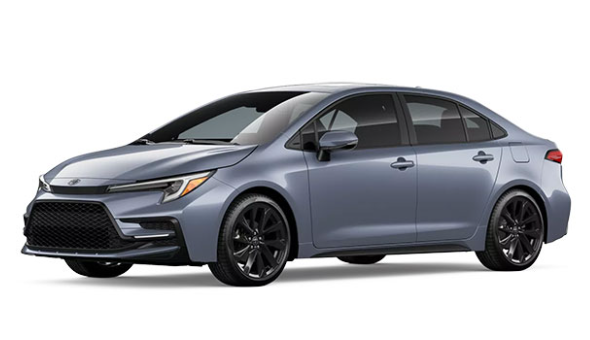
Toyota Corolla Hybrid
From ₦20,000,000 (Tokunbo)
The most accessible hybrid for the Nigerian mass market. Its 1.8-litre engine paired with an electric motor delivers a real-world efficiency of approximately 23–26 km per litre — phenomenal in stop-and-go Lagos traffic where the electric motor handles most of the low-speed crawling. Battery concerns that plagued early adopters are largely resolved; mechanics in Ladipo, Onitsha, and Wuse are now trained on the system.
AWD is also available on select trims, adding a rear electric motor to drive the rear wheels – rare in this segment and useful for Nigerian roads with unpredictable surface conditions. Cars.com
Battery concerns that plagued early adopters are largely resolved. Mechanics in Ladipo (Lagos), Onitsha, and Wuse (Abuja) are increasingly trained on the hybrid system, and Toyota backs the hybrid components with an 8-year/100,000-mile warranty, with the hybrid battery covered for 10 years or 150,000 miles — giving buyers meaningful long-term protection. Beaman Toyota
All Corolla Hybrids come standard with Toyota Safety Sense 3.0, which includes forward collision warning with pedestrian detection, automatic emergency braking, lane departure steering assist, adaptive cruise control, automatic high beams, and road sign recognition. Blind spot warning with rear cross-traffic alert is newly standard for 2026. Cars.com
Spec Pills: 1.8L + Electric · 138 HP · ~25 km/L City · 50 MPG Combined · AWD Available · CVT Auto · TSS 3.0 Standard
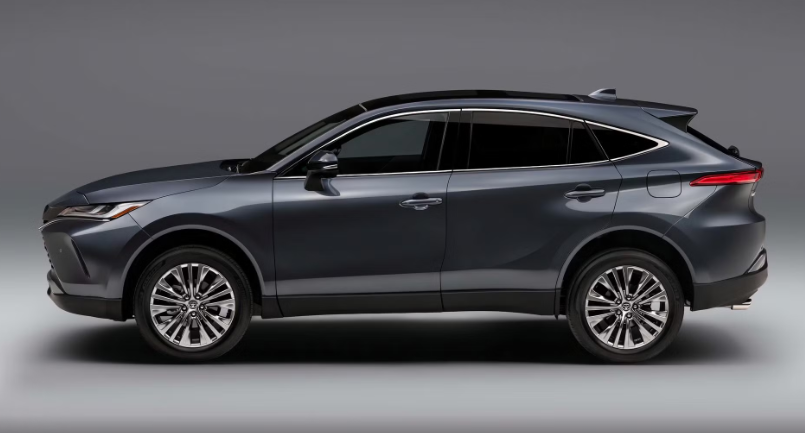
Toyota Venza (2nd Gen Hybrid)
₦52,000,000 – ₦85,000,000
The hybrid-only second-generation Venza is a genuine executive crossover. Toyota paired a 2.5-litre engine with three electric motors for 219 combined horsepower, delivering 35–40 km per litre in real-world conditions. The panoramic glass roof, 12.3-inch touchscreen, and Lexus-rivalling cabin make it a compelling alternative to European SUVs – with Toyota reliability baked in.
~38 km/L2.5L + 3 Electric Motors219 HPAWD Available
The Toyota Venza (2nd Generation) is in a class of its own among hybrid SUVs on the Nigerian market and for good reason. Powered exclusively by the Toyota Hybrid Electric Vehicle System, the Venza produces 219 net system horsepower from a 2.5-litre four-cylinder engine paired with three electric motors – one driving the front axle and one each for the rear, managed through an electronically controlled CVT. There is no petrol-only option. Every Venza that rolls off the production line is a hybrid, and every single trim comes with standard Electronic On-Demand All-Wheel Drive a feature most competitors charge extra for. Jiji.ngLuxury Cars Nigeria
The EPA rates the Venza at 40 MPG city and 37 MPG highway, for a combined 39 MPG — translating to a real-world Nigerian figure of approximately 17–22 km per litre depending on driving conditions. That range tells an important story: this is where the Venza’s hybrid system genuinely earns its keep on Nigerian roads. Jiji.ng
Here is exactly what the Venza Hybrid burns — and what it costs you — across real Nigerian routes at ₦1,400/litre:
Lagos: Lekki Phase 1 → Victoria Island (approx. 12 km, heavy traffic) In Lekki–VI go-slow during peak hours, the Venza’s electric motor takes over almost entirely below 40 km/h. Fuel consumption in this scenario drops to roughly the equivalent of 35–40 MPG city – the hybrid system is at its most efficient.
- Fuel used: ~0.7 litres
- Cost at ₦1,400/litre: ≈ ₦980 per trip
- Equivalent petrol SUV (e.g. non-hybrid Venza V6): ~2.2 litres → ≈ ₦3,080
- Daily saving (return trip): ≈ ₦4,200
- Monthly saving (22 working days): ≈ ₦92,400
Lagos: Ojodu Berger → Lagos Island via Third Mainland Bridge (approx. 35 km, mixed) Mixed traffic — fast on the bridge, stop-start through Onikan and Marina.
- Fuel used: ~2.1 litres
- Cost: ≈ ₦2,940 per trip
- Non-hybrid equivalent: ~5.5 litres → ≈ ₦7,700
- Monthly saving (22 days, return): ≈ ₦209,440
Abuja: Kubwa → Central Business District (approx. 30 km, moderate traffic) Abuja roads are wider and faster-flowing than Lagos. At highway speeds above 60 km/h, the petrol engine takes a larger share and efficiency drops slightly — but the Venza still returns strong numbers on the Airport Road and Express.
- Fuel used: ~1.8 litres
- Cost: ≈ ₦2,520 per trip
- Non-hybrid equivalent: ~4.5 litres → ≈ ₦6,300
- Monthly saving (22 days, return): ≈ ₦168,960
Port Harcourt: Trans-Amadi → GRA Phase 3 (approx. 15 km, heavy industrial traffic) PH traffic is notorious — slow-moving convoys, tanker holdups, and frequent stop-starts on Aba Road and Rumuola. This is the hybrid’s dream scenario.
- Fuel used: ~0.9 litres
- Cost: ≈ ₦1,260 per trip
- Non-hybrid equivalent: ~2.8 litres → ≈ ₦3,920
- Monthly saving (22 days, return): ≈ ₦117,040
Lagos–Ibadan Expressway (approx. 130 km, highway) At sustained highway speeds of 100–120 km/h, the petrol engine dominates and the efficiency advantage narrows — but the Venza still pulls ahead of conventional SUVs.
- Fuel used: ~8.2 litres
- Cost: ≈ ₦11,480
- Non-hybrid equivalent: ~18 litres → ≈ ₦25,200
- Saving per trip: ≈ ₦13,720
For a typical Nigerian driver covering 12,000–15,000 km per year, the Venza will save hundreds of thousands of naira in fuel costs over time compared to a non-hybrid SUV of similar size. At current pump prices, that saving accelerates dramatically, many Venza owners in Lagos report cutting their monthly fuel spend from ₦150,000–₦200,000 down to ₦55,000–₦75,000 per month. The numbers are not theoretical. They are felt at the end of every month. WheelZAR
Beyond fuel, the Venza distinguishes itself with a cabin that punches decisively above its price class. The interior features a 12.3-inch Toyota Audio Multimedia touchscreen with wireless Apple CarPlay and Android Auto, an optional 10-inch head-up display, a 12.3-inch digital gauge cluster, and the signature Star Gaze fixed panoramic roof — a glass roof panel that switches from transparent to frosted at the touch of a button. In a Nigerian market where executive buyers have historically chosen Lexus or European SUVs for interior prestige, the 2nd Gen Venza changes the conversation. Carlots
Four driving modes — EV, Eco, Normal, and Sport; let the driver optimize between maximum efficiency and available power. In Lagos go-slow, EV mode is your best friend. On the Lekki–Epe Expressway at night, Sport mode delivers the smooth surge needed to overtake confidently. The system reads the road and adjusts — which is precisely why the Venza is not just a fuel-saver, but a genuinely satisfying drive. Luxury Cars Nigeria
Tokunbo 2021–2023 Venza units in Nigeria currently range from ₦32 million to ₦55 million depending on trim and condition — with the sweet spot being 2021–2022 XLE trims, which carry all the premium features at the lower end of that range. Brand new units, available on special order, are priced from approximately ₦43,770,000 and above, with full-spec Limited trims pushing considerably higher once duty and agent fees are factored in. Cars.comExchange Rates UK
Spec Pills: 2.5L + 3 Electric Motors · 219 HP · AWD Standard · 39 MPG Combined · ~19 km/L Average · 4 Drive Modes · Star Gaze Roof · TSS 2.5+ Standard
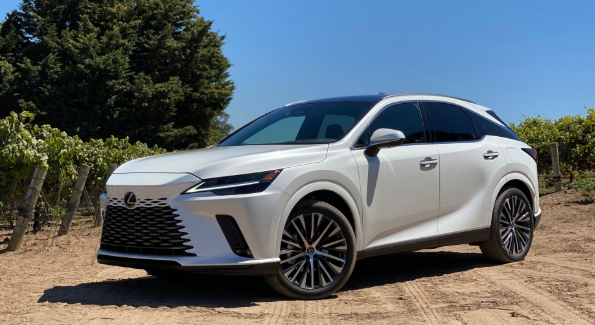
Lexus RX 450h
From ₦18,500,000 (Used) · ₦43,000,000+ (New)
For buyers who want the prestige of a luxury SUV without the maintenance anxiety of a German alternative, the RX 450h is the definitive choice. Its V6 hybrid system produces 308 horsepower, handles Nigerian expressways effortlessly, and returns city fuel economy that regularly surprises owners. Parts share extensively with the Toyota platform, keeping servicing costs far below comparable European options.
The Lexus RX 450h occupies a singular position in the Nigerian luxury SUV market: it delivers German-rivalling prestige and interior refinement, backed by Toyota’s hybrid reliability track record and a parts ecosystem that is far more accessible than anything wearing a BMW, Mercedes-Benz, or Audi badge. For the Nigerian executive buyer who wants to make a statement without writing a blank cheque to a mechanic every three months, it is the definitive answer.
The RX 450h+ is powered by a 2.5-litre inline four-cylinder engine paired with two electric motors — one front, one rear — delivering a combined system output of 304 horsepower and 233 lb-ft of torque, all transmitted through a continuously variable transmission with standard AWD. That powertrain moves the RX 450h+ from 0–100 km/h in approximately 6.2 seconds — quicker than most Nigerian buyers will ever need, but reassuring on the Abuja–Kaduna Expressway or when overtaking on the Lagos–Ibadan highway at night. The FamousNaija
The RX 450h+ carries an 83 MPGe combined rating when driving on electric power, with a 37-mile all-electric range on a full charge. Running on hybrid power alone — which is how virtually every Nigerian owner will operate it, given the country’s limited public charging infrastructure — the EPA rates it at 35–36 MPG combined city/highway. In Nigerian real-world terms, that translates to approximately 15–20 km per litre in mixed driving — exceptional for a full-size luxury SUV of this weight and performance class. Sellatease
Here is exactly what the Lexus RX 450h burns — and what it costs you — across real Nigerian routes at ₦1,400/liter, compared against a conventional non-hybrid luxury SUV of equivalent size (e.g. RX 350 petrol, Land Cruiser Prado V6):
Lagos: Ikoyi / Banana Island → Lekki Phase 1 (approx. 18 km, moderate–heavy traffic) This is the natural home territory of the RX 450h in Nigeria — affluent Lagos corridors with frequent speed bumps, roundabouts, and stop-start traffic on Ozumba Mbadiwe and Admiralty Way. The hybrid system excels here.
- Fuel used (RX 450h): ~1.1 litres
- Cost at ₦1,400/litre: ≈ ₦1,540 per trip
- Equivalent non-hybrid luxury SUV: ~3.5 litres → ≈ ₦4,900
- Daily saving (return trip): ≈ ₦6,720
- Monthly saving (22 working days): ≈ ₦147,840
Abuja: Maitama / Asokoro → Wuse II / Central Business District (approx. 14 km, light–moderate) Abuja’s wide boulevards and roundabouts suit the RX’s smooth, unhurried driving character. Less stop-start than Lagos, but the hybrid system still recovers meaningful energy through regenerative braking at each roundabout.
- Fuel used (RX 450h): ~1.0 litre
- Cost: ≈ ₦1,400 per trip
- Non-hybrid equivalent: ~2.8 litres → ≈ ₦3,920
- Monthly saving (22 days, return): ≈ ₦110,880
Port Harcourt: GRA Phase 2 → Trans-Amadi Industrial Layout (approx. 12 km, heavy traffic) PH traffic, particularly around Rumuola Road and the Rumuokoro flyover, is exactly the kind of stop-and-go that allows the RX 450h’s electric motor to shine — carrying the car forward silently while the petrol engine rests.
- Fuel used (RX 450h): ~0.85 litres
- Cost: ≈ ₦1,190 per trip
- Non-hybrid equivalent: ~3.0 litres → ≈ ₦4,200
- Monthly saving (22 days, return): ≈ ₦131,120
Lagos–Abuja road trip via Lokoja (approx. 740 km, predominantly highway) The RX 450h’s efficiency advantage narrows on the open road — sustained highway speeds keep the petrol engine engaged — but the gap over a conventional luxury SUV remains significant over this distance.
- Fuel used (RX 450h): ~52 litres
- Cost: ≈ ₦72,800
- Non-hybrid equivalent (e.g. Prado V6): ~105 litres → ≈ ₦147,000
- Saving per round trip: ≈ ₦74,200
Abuja Airport Road: Jabi / Life Camp → Nnamdi Azikiwe International Airport (approx. 25 km, fast flow) A representative highway-style run, fast-moving with little congestion.
- Fuel used (RX 450h): ~1.7 litres
- Cost: ≈ ₦2,380 per trip
- Non-hybrid equivalent: ~4.2 litres → ≈ ₦5,880
- Saving per trip: ≈ ₦3,500
The fuel savings are compelling but in the RX 450h’s case, they are not the primary argument. The primary argument is what you get for the money inside the car. The cabin features perforated semi-aniline leather-trimmed seating, heated and ventilated power-adjustable front and rear seats, thematic ambient lighting, a heated wood and leather-trimmed steering wheel, a Lexus Memory System, and a standard panorama glass roof. The 14-inch high-definition touchscreen with wireless Apple CarPlay and Android Auto sits at the heart of the dashboard, and a 21-speaker Mark Levinson Premium Surround Sound System is available, an audio setup that rivals dedicated home hi-fi systems and is the best factory sound system available in any SUV at this price point in Nigeria. NigeriansearchguideNigeriansearchguide
Real-world testing by automotive journalists confirmed fuel economy of 36.2 MPG on hybrid power alone, with one independent reviewer noting the hybrid transitions between electric and petrol are imperceptible, a seamless, floating quality to the powertrain that Lexus has refined over two decades of hybrid development. In Lagos traffic, the RX 450h moves in near silence much of the time, which adds a dimension to the luxury experience that no V6 petrol SUV can replicate. Autogiz
For the Nigerian buyer choosing between the RX 450h and a European alternative — say, a BMW X5 or Mercedes GLE — the financial case beyond the sticker price is decisive. Servicing an X5 in Lagos can run ₦800,000 to ₦1,500,000 per scheduled service at an authorised dealer. The RX 450h, sharing its fundamental mechanical architecture with the Toyota platform, is serviced across the same network of Toyota-trained mechanics in Ladipo, Dei-Dei, and Rumuola. Parts are available, costs are predictable, and breakdowns on the Third Mainland Bridge at 11pm are an order of magnitude less likely.
The 2026 Lexus RX 450h+ Luxury AWD is priced from ₦150,000,000 brand new in Nigeria, while Tokunbo units on Jiji.ng start from ₦18,500,000 for older generations — making it accessible across a wide range of budgets depending on the year and generation you target. 234Drive
Spec Pills: 2.5L + 2 Electric Motors · 304 HP · AWD Standard · 35–36 MPG Hybrid · ~18 km/L Mixed · 37-Mile EV Range · 14" Touchscreen · Mark Levinson Audio · LSS+ 3.0 Standard
~20–25 km/L City3.5L V6 + Electric308 HPAWD Standard
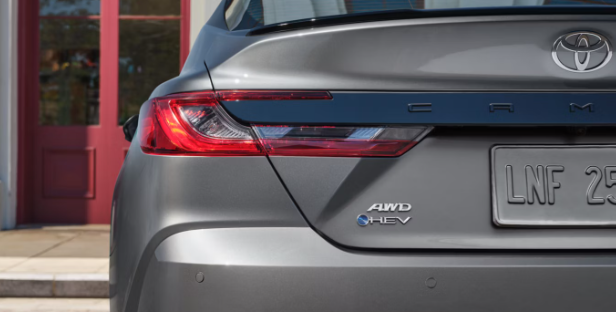
Toyota Camry Hybrid
Cost from ₦42,000,000 (Tokunbo, clean 2021–2023 units) Brand New 2026: ₦55,000,000 – ₦90,000,000+ (depending on trim and duty) At today’s rate: $1 USD = ₦1,375 (CBN official) / ₦1,398 (parallel market)
The executive’s daily driver. The Camry Hybrid has shed its “boring sedan” reputation with a bold exterior redesign and a cabin that genuinely competes with entry-level European luxury. For the Nigerian corporate buyer – or anyone who covers significant highway distance daily – its combination of stability, prestige, and exceptional fuel economy makes a compelling financial argument at any fuel price, let alone ₦1,400 per liter.
The 2026 Toyota Camry is now offered exclusively as a hybrid. Toyota has dropped the petrol-only option entirely, a bold industry signal that the era of the conventional midsize sedan is definitively over. For Nigerian executive buyers who have long driven the Camry as a status and performance statement, this is not a downgrade — it is a significant upgrade in every metric that matters at ₦1,400 per litre. Autoblog
Every 2026 Camry is powered by a 2.5-litre four-cylinder hybrid engine paired with an electronically controlled CVT. Front-wheel drive models produce 225 horsepower, while the available Electronic On-Demand All-Wheel Drive adds a rear electric motor, pushing output to 232 horsepower. Tustin Toyota
The LE FWD trim achieves an EPA-estimated 52 MPG city and 49 MPG highway for 51 MPG combined making it one of the most fuel-efficient midsize executive sedans on the planet. In Nigerian real-world conditions, expect 22–28 km per litre depending on traffic density and driving style. Tustin Toyota
The Camry Hybrid has shed its “boring sedan” reputation convincingly. Five trims: LE, SE, Nightshade Edition, XLE, and XSE – cover every buyer preference, from the value-focused commuter to the style-conscious executive. The XLE and XSE upgrade to a 12.3-inch touchscreen and 12.3-inch digital gauge cluster, with a panoramic glass roof available on the top trims. Tustin Toyota
Toyota backs the Camry Hybrid with a 10-year/150,000-mile hybrid battery warranty, the longest in its segment, and particularly reassuring for Nigerian buyers factoring in long-term ownership in tropical heat conditions. Parts share extensively with the broader Toyota ecosystem, keeping servicing costs far below comparable European alternatives. NextCarReview
For the Nigerian corporate buyer or anyone covering significant distance daily between Lagos, Abuja, or Port Harcourt, the combination of executive presence, genuine performance, and fuel economy that cuts pump spend by over 50% makes the Camry Hybrid the most financially compelling midsize sedan on the market today.
Spec Pills: 2.5L + Electric · 225–232 HP · ~25 km/L City · 51 MPG Combined · AWD Available · ECVT Auto · TSS 3.0 Standard · 5-Star NHTSA Safety
Why Nigerian Roads Actually Favour Hybrids

Lagos traffic is a hybrid car’s ideal environment. At low speeds, the electric motor operates silently while the petrol engine rests. Photo: Unsplash
Here’s the counterintuitive truth about hybrid technology: the more congested your commute, the better it works. In a conventional car, stop-and-go traffic is a fuel-burning nightmare, the engine keeps running even when you’re stationary. In a hybrid, the petrol engine switches off the moment you slow below a threshold speed, and the electric motor handles all the creeping forward in go-slow.
For a Lagos commuter stuck on the Third Mainland Bridge or navigating Oshodi at 8am, this is not a marginal improvement, it is a fundamental transformation of how much fuel you burn. The data backs it up: a hybrid travelling the same Lagos route as a conventional car will use roughly 60% less fuel in heavy traffic conditions. At ₦1,300 per litre, that math speaks for itself.
Additionally, concerns about hybrid battery performance in Nigeria’s tropical heat are gradually being addressed. Yes, extreme heat and dust can accelerate battery degradation over time – but manufacturers have designed thermal management systems specifically for this, and real-world evidence from thousands of hybrid owners across Lagos, Abuja, and Port Harcourt suggests the batteries hold up well under normal use. Replacement batteries, while not cheap, are increasingly available through verified importers.
Honest Assessment: The Pros and the Cons
No vehicle decision is without trade-offs. Here is a clear-eyed look at both sides:
Advantages
- Dramatically lower fuel spend – up to 60% savings in city traffic
- No range anxiety – no need for charging stations
- Self-charging battery via regenerative braking
- Lower engine wear at low speeds (electric motor takes over)
- Toyota/Lexus hybrid parts increasingly available in Nigeria
- Strong resale value – demand is rising sharply
- Quieter, smoother drive quality especially in traffic
- Reduced emissions — better for urban air quality
Considerations
- Higher purchase price than equivalent petrol models
- Battery replacement cost (long-term) can be significant
- Fewer mechanics trained on hybrid systems outside major cities
- Tropical heat can slightly reduce battery lifespan over time
- High-mileage Tokunbo units may have degraded battery health
- PHEV variants impractical without charging infrastructure
Before You Buy: A Practical Checklist
Buying a hybrid — especially a used or Tokunbo unit requires a few additional checks beyond the standard inspection. These are non-negotiable:
Mywheels9ja Hybrid Buyer’s Checklist
- Request a battery health report. Any reputable seller should be able to run a hybrid battery diagnostic. Aim for at least 70–75% state of health on used units.
- Check for error codes. Connect an OBD-II scanner and look specifically for hybrid battery and inverter fault codes before committing.
- Test in traffic, not just on the open road. Take the car for a test drive in actual stop-and-go conditions. Watch the energy monitor — the electric motor should engage frequently at low speeds.
- Verify service history. Confirm coolant changes and inverter service history. Hybrid systems have their own maintenance schedule beyond standard engine servicing.
- Confirm parts availability locally. For Toyota and Lexus hybrids, Ladipo Market in Lagos and Dei-Dei in Abuja are your benchmarks. If you can find battery modules there, you’re buying a serviceable car.
- Use a verified mechanic for inspection. Find a mechanic specifically trained in hybrid systems. Search verified hybrid mechanics on Mywheels9ja.
The Road Ahead: Nigeria’s Hybrid and EV Future

Nigeria’s EV and hybrid transition is accelerating, driven by federal policy, private investment, and the economic pressure of high fuel prices. Photo: Unsplash
The broader trajectory is unmistakable. Nigeria’s Electric Vehicle Transition Bill — which passed its second reading in the Senate in late 2025 — creates tax holidays and import duty frameworks that will make both hybrids and full EVs more accessible in the coming years. The federal government has also signed an MOU to establish an EV assembly plant in Kano, with a projected capacity of 300,000 vehicles annually.
For now, hybrids occupy the ideal middle ground for the Nigerian driver: they deliver the fuel savings of tomorrow’s technology while requiring none of the infrastructure that tomorrow’s full EVs depend on. There are fewer than 80 public fast-charging stations in Nigeria today; concentrated in Lagos, Abuja, and Port Harcourt, making a full EV impractical for most drivers. A hybrid needs none of that. It plugs into nothing. It saves money from day one.
Whether fuel prices stabilise or continue climbing, one thing is clear: the era of buying a car without considering its fuel economy has permanently ended in Nigeria. The drivers who adapt first will spend less, worry less, and drive further on every naira they spend at the pump.
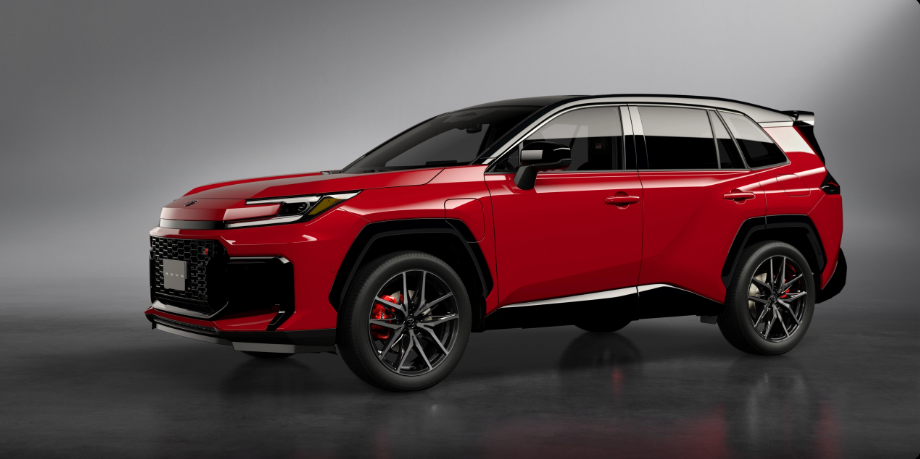
“Toyota’s decision to make the 2026 RAV4 exclusively hybrid is no accident — it’s a signal of where the entire industry is heading. Nigerian buyers paying attention will be ahead of the curve.”
Final Verdict
If you are buying a car in Nigeria in 2026 and your daily commute involves any city driving; Lagos, Abuja, Port Harcourt, Ibadan, Enugu — a hybrid is not the future anymore. It is the present, and it is the most financially rational choice on the market at current fuel prices.
Start with the Toyota Corolla Hybrid if budget is your primary consideration. Step up to the Toyota Venza Hybrid if you want comfort and executive presence with outstanding efficiency. Choose the Lexus RX 450h if you want premium luxury without the German maintenance bill. All three are the right answer to the same question: how do you stop fuel prices from draining your finances every single month?
Ready to Find a Hybrid in Nigeria?
Browse verified hybrid car listings, tokunbo imports, and hybrid-trained mechanics near you — all on Mywheels9ja.Browse Current Listings →
References & Sources
- Best Sales NG — Fuel Price in Nigeria Today (March 2026)
- 247 News NG — Latest Fuel Price in Nigeria Now (March 2026)
- Intelpoint — Nigeria Fuel Consumption Post-Subsidy Removal
- WheelZAR — Top 5 Hybrid Cars in Nigeria for 2026
- Carlots.ng — 5 Fuel-Efficient Cars to Survive Nigerian Petrol Prices in 2026
- RMI (Rocky Mountain Institute) — Nigeria’s Year in the Driver’s Seat for Electric Vehicles (2026)
- EV Car Latest — Electric Cars in Nigeria 2026: Prices, Models & Buyer’s Guide
- Al Jazeera — Nigerian Petrol Prices Reach Record High After Subsidy Removal
MW
Mywheels9ja Editorial
Nigeria’s automotive marketplace — connecting buyers, sellers, mechanics and car lovers across Lagos, Abuja, Port Harcourt and beyond. Visit us at mywheels9ja.com.ng
Comments